Primary Audience:Individuals, especially those working in communication, education, or social work, who directly influence or engage with others and wish to promote gender equality through their language and behavior
Secondary Audience:Educators, social workers, and professionals
Tertiary Audience:Community members, policymakers, and activists
Brief Description:
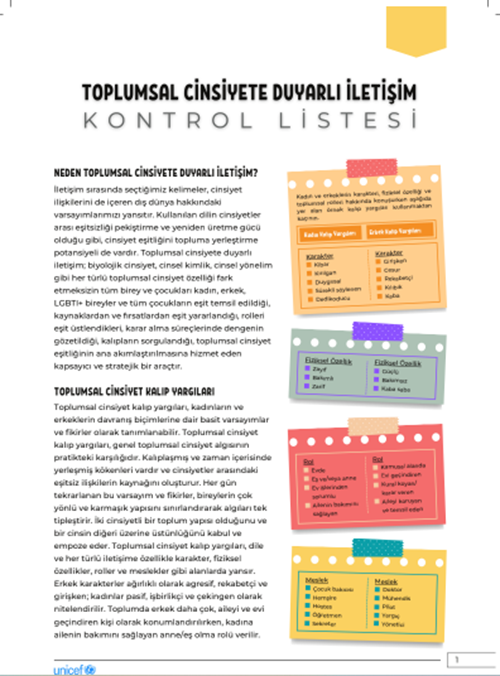
This material provides a checklist for gender-sensitive communication, offering guidance on how to use inclusive language to challenge gender stereotypes and promote gender equality in everyday interactions.