
Audience: Parents/Caregivers , Pediatricians, early childhood educators, and speech therapists , General public interested in early childhood development or speech therapy
This material offers fun and engaging exercises to enhance speech development in young children through various playful activities involving breathing exercises and tongue/lip movements.
Audience: Parents/Caregivers , Special educators/rehabilitation staff who guide sessions , Health/rehab institutions and programs that distribute guidance materials.
A practical guide explaining why sound-direction skills are hard after cochlear implantation and offering staged games/exercises for parents and teachers to build children’s sound-field orientation over time.
Audience: Parents/Caregivers , Other close family members involved in caregiving (e.g., grandparents) and early childhood educators , Health/psychosocial professionals who may recommend the leaflet or receive referrals (psychologist/psychotherapist).
A short parenting booklet explaining what anxiety looks like in children and offering simple, calm, confidence-building strategies for caregivers, plus guidance on when to consult a psychologist/psychotherapist.
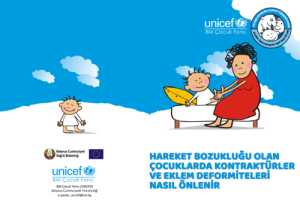
Audience: Parents/Caregivers , Physiotherapists/kinesitherapy specialists and rehabilitation staff who guide home exercise routines , Primary health-care providers/community health workers and program stakeholders supporting early intervention/disability services.
A UNICEF-supported caregiver booklet explaining why contractures occur in children with movement disorders and demonstrating daily gentle range-of-motion exercises and positioning to prevent joint stiffness and deformities
Audience: Mothers and primary caregivers , Fathers, partners, and family members , Parenting educators, Counselors, and Early Childhood Professionals
A UNICEF Belarus booklet explaining how early bonding and parenting practices influence child development, highlighting the mother’s role, harmful parenting patterns, and the father’s role in supporting healthy family dynamics.

Audience: Parents/Caregivers , Kinesiotherapists/early intervention/rehabilitation professionals who guide families , Pediatric/primary healthcare providers and child-development services that refer/support families.
A short UNICEF guide explaining why visually impaired children may have delayed motor milestones and offering practical ways to create safe, stimulating environments and support movement through guidance and tactile input.
Audience: Parents/Caregivers , Other family members involved in childcare (e.g., grandparents/extended family) , Practitioners who support families (child psychologists, counselors, health/social service staff)
A short UNICEF parenting booklet explaining how birth order, age gaps, and gender shape sibling relationships, jealousy and rivalry, and offering practical ways parents can prevent conflict and support fair, healthy family dynamics.
Audience: Parents/Caregivers , Caregivers and close family involved in the child’s life , Frontline child/family support providers (psychologists, psychotherapists, child mental-health services)
A short UNICEF information booklet explaining how parental divorce affects children emotionally and behaviorally, and offering practical guidance to parents to reduce harm and support healthy adjustment.
Audience: Parents/Caregivers , Extended family members and close supporters who influence acceptance, daily care, and early stimulation at home , Health, early childhood, and rehabilitation professionals
An informational booklet explaining Down syndrome, addressing parents’ emotions after diagnosis, and encouraging early developmental support and services so children can learn, adapt socially, and thrive
Audience: Parents/Caregivers , Frontline and primary health/child-development service providers , Speech and child-development specialists and the wider support system around the child (extended family like grandparents, daycare staff)
A UNICEF booklet guiding parents on children’s speech development from birth to age five, highlighting typical milestones, home stimulation tips, warning signs, and when to consult a speech therapist.