
Browse resources by the Social and Behaviour Change (SBC) level they target.
Audience: NGO/INGO field staff and partner implementers delivering services , Community members affected by the response (women/men/children/adolescents and persons/children with disabilities) as the intended beneficiaries of better AAP practice , Managers/supervisors/M&E or accountability teams who set up and monitor feedback mechanisms and participation processes
A guidance tip sheet for NGOs on applying AAP: provide clear information, enable inclusive participation, and run safe feedback/complaint mechanisms (including confidential channels for sensitive issues) in Türkiye response settings.
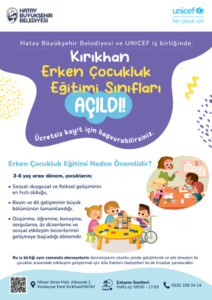
Audience: Parents/Caregivers , Community members affected by the earthquake/displacement in the Container City area, including Arabic-speaking families (same message in Turkish and Arabic) , Local service providers/community mobilizers (municipality/UNICEF partners) who can refer families to enroll
A bilingual (Turkish–Arabic) brochure announcing free registration for UNICEF–Hatay Municipality early childhood education classes in Kırıkhan, with hours, location, phone number, and key benefits for ages 3–6.
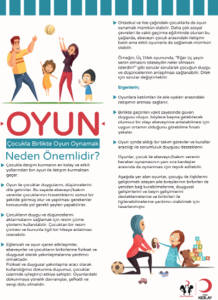
Audience: Parents/Caregivers , Children and adolescents , Facilitators/teachers/PSS staff
A family guide explaining why play improves communication and emotional development, and offering age-wise games (2–6, 6+, adolescents) and traditional/challenge activities to strengthen parent–child bonds.
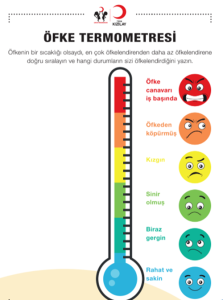
Audience: Adolescents , Facilitators/teachers/PSS staff , Parents/caregivers
A simple “anger thermometer” worksheet that asks children to list situations that make them angry and rank them by intensity from calm to “anger monster.”
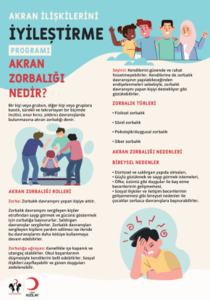
Audience: Parents/Caregivers , Children/adolescents (as potential victims, perpetrators, or bystanders—descriptions focus on children’s behaviours and experiences) , Wider community/authorities involved in reporting and response (police/prosecutor’s office, helpline, digital safety resources)
A seminar brochure explaining peer bullying (roles, types, causes, effects), how to distinguish bullying from jokes/conflict, warning signs, and steps for schools/families including cyberbullying reporting.
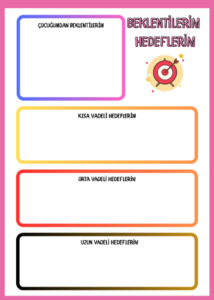
Audience: Individuals seeking personal or family-related goals , Support systems like family, friends, or mentors who may be helping with goal-setting or providing guidance , Broader audience such as community groups, counselors, or any external supporters
This document outlines personal expectations and goals in the short, medium, and long term, with a focus on expectations related to family and children.
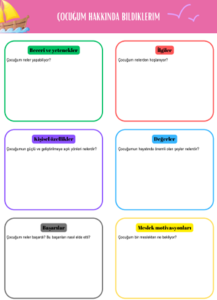
Audience: Parents/Caregivers , Career counselors, teachers, facilitators , Adolescents/children (indirect beneficiaries)
A parent-focused worksheet prompting reflection on a child’s skills, interests, values, achievements, personality traits, and career motivations to support informed educational and career guidance.
Audience: Survivors of gender-based violence (GBV), particularly Arabic-speaking individuals in Turkey. , Friends, family members, or caregivers supporting survivors , Broader migrant/refugee communities and service providers raising awareness about GBV response pathways
A social media caraousel post informing GBV survivors about emergency support, medical care, emotional assistance, legal counseling, and national hotline numbers in Turkey.
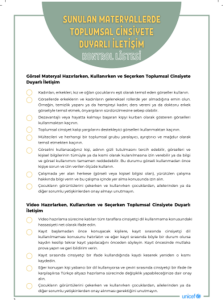
Audience: Community leaders , Trainers, facilitators, educators, and institutional communication teams , Broader institutions (public sector, CSOs, media organizations)
A practical checklist guiding visual, video, and event communication to ensure gender-sensitive, non-stereotypical, and ethical representation, including consent procedures and inclusive participation principles.
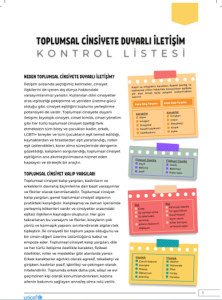
Audience: Individuals, especially those working in communication, education, or social work, who directly influence or engage with others and wish to promote gender equality through their language and behavior , Educators, social workers, and professionals , Community members, policymakers, and activists
This material provides a checklist for gender-sensitive communication, offering guidance on how to use inclusive language to challenge gender stereotypes and promote gender equality in everyday interactions.